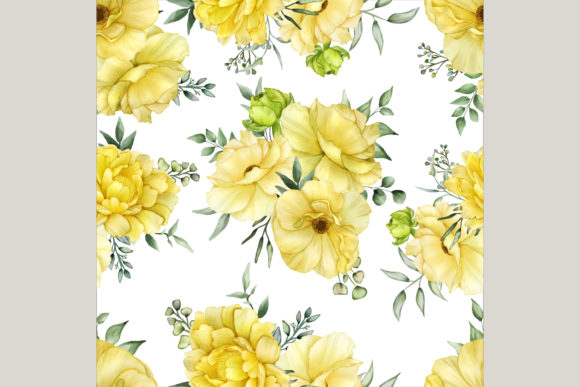
Watercolor Flower Seamless Pattern Design: A Versatile Asset for Creative Projects
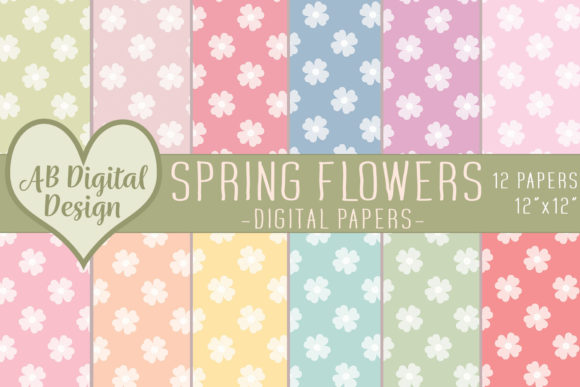
For designers, artisans, and business owners, time is a critical resource. The search for unique, high-quality visual assets can consume hours of a project's early phases. This is where a well-crafted watercolor flower seamless pattern design enters the workflow, serving not as a final artwork but as a foundational, reusable component. These patterns are digital assets featuring hand-painted, organic floral and leaf motifs that tile perfectly without visible seams. Their inherent charm and flexibility make them a strategic starting point for a multitude of applications, from digital backgrounds to physical product decoration.
Integrating Patterns into Your Production Pipeline
Consider your project's lifecycle: conceptualization, asset selection, execution, and final output. A seamless pattern acts as a bridge between the idea and the tangible result. Before finalizing a brand's visual direction or a product's aesthetic, you can test these patterns in mock-ups. Their editable nature means you are not committing to a fixed color palette or layout prematurely. During the execution phase, the pattern becomes a dynamic layer in your software, adaptable to the specific dimensions and requirements of your wallpaper, website header, or fabric swatch. This integration eliminates the need to create custom repeating artwork from scratch for each new item, ensuring consistency across a product line or marketing campaign.
Core Technical Features for Practical Workflow
The advertised features of a professional pattern bundle—AI, EPS formats, 100 editable vectors, pre-sizable, unlimited color variations—are not mere specifications; they are workflow enablers. The inclusion of layered AI files means a graphic designer working in Adobe Illustrator can deconstruct the pattern. They can isolate a specific flower, alter the stroke weight of a leaf, or rearrange elements to create a derivative design without damaging the original artwork. This is crucial for brand adaptation, where a core pattern might need slight modifications for a seasonal sub-campaign.
The EPS file ensures compatibility with a wide range of professional vector software, aiding collaboration between teams using different tools. The JPG file serves as a quick-place visual for prototyping in layout software or for clients who need a preliminary preview. The promise of unlimited color variations speaks directly to efficiency. Instead of purchasing multiple pattern packs for different color schemes, a designer can, within minutes, shift the entire palette to match a newly chosen brand color, saving both budget and project time.
Application-Specific Implementation Strategies
How you prepare and use the asset changes depending on your end goal. For each use case, the preparation and process differ, maximizing the asset's value.
For Digital Backgrounds and Wallpaper
When creating website backgrounds or desktop wallpaper, the primary concerns are resolution, tile integrity, and visual weight. Start by opening the EPS or AI file in your design program. Scale the pattern to the appropriate size for your canvas. Because it is built from vectors, scaling up for high-resolution displays does not cause pixelation. Test the tiling by duplicating the pattern across a large artboard to ensure the seams are invisible. A practical tip: for web use, consider exporting a section of the pattern as a PNG with transparency for overlays, using the JPG preview as a guide for how the full repeat will look. This allows for faster browser loading while maintaining the aesthetic.
For Textile and Physical Product Design
Applying a pattern to clothing, wrapping paper, or fabric involves additional steps for manufacturing compatibility. After editing the colors to your satisfaction in AI, consult with your printer or manufacturer regarding their specific file requirements. Many require a very high-resolution, color-separated PDF or a specific vector format. The editable layers allow you to simplify the pattern if needed for a particular printing technique, like screen printing, by merging less detailed layers. Organize your project folder to include the final production file, the original editable AI (for future modifications), and a JPG proof for your own records. This organization guarantees you can efficiently reorder or adapt the product in the future.
For Marketing and Branding Materials
In this context, the pattern becomes part of a larger visual system. It can serve as a background for social media graphics, a subtle texture on brochure borders, or a full-wrap design on packaging. To maintain brand consistency, define a small set of approved color variations from the unlimited possibilities. Save these variations as separate AI files named clearly, e.g., "FloralPattern_BrandPrimary.ai". This creates a controlled, reusable brand asset library. When onboarding new team members or freelancers, you can provide these files alongside your brand guide, ensuring everyone uses the pattern correctly without needing to manipulate the original colors themselves.
Long-Term Asset Management and Quality Control
A high-quality seamless pattern design is not a one-time purchase; it's a long-term investment. Its usability over years depends on how you integrate it into your asset management ecosystem. Store the original downloadable bundle—containing the AI, EPS, and JPG—in a dedicated "Master Vector Assets" folder on your cloud storage or server. Before editing, always duplicate the file. This preserves the original in case of editing errors and follows good digital hygiene. Furthermore, the vector nature of the core files means they are immune to the obsolescence of resolution trends. As new mediums require higher DPI (like 4K screens or ultra-fine fabric printing), your vector pattern can scale infinitely to meet that demand, protecting the quality and relevance of your projects over time.
The true value of a beautiful floral and leaves seamless pattern design lies in its reduction of friction. It provides a ready-made solution that is nonetheless customizable, fitting into the planning stage as a flexible concept, into the execution stage as a malleable tool, and into the final product as a polished, professional visual. By understanding its features as process advantages—editing for adaptation, scalability for future-proofing, and format variety for cross-platform collaboration—you can seamlessly integrate this resource into your creative or commercial workflow, saving invaluable time while elevating the aesthetic consistency of your outputs.