The Boots and Flowers Minimal Embroidery Design: Your Next Creative Spark
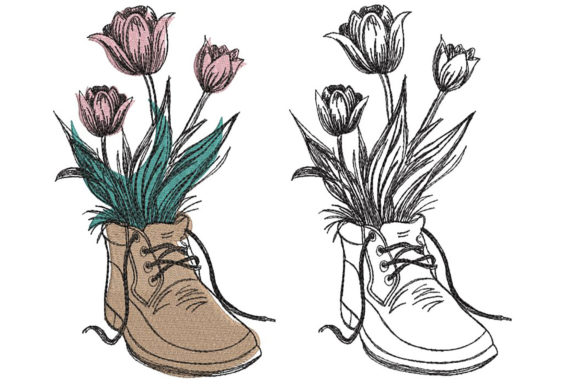
You might be browsing through embroidery files, searching for something that speaks to a specific feeling. Something that balances rugged charm with delicate beauty. That's where the Boots and Flowers Minimal design finds its home. It’s a digital embroidery file featuring a stylized, clean-lined illustration of a boot—often a classic work boot or cowboy boot—paired with elegant, simplified floral elements. This isn't a hyper-realistic rendering; the "Minimal" in its name is key. It uses negative space, clean outlines, and a graphic approach to create a design that’s versatile enough to be stitched in a single thread color for a stark, modern look, or exploded into a full-color botanical celebration.
Where This Design Finds Its Feet: Real-World Applications
Embroidery designs aren't just patterns; they’re tools for expression and personalization. The Boots and Flowers Minimal motif, with its juxtaposition of utilitarian boots and delicate flora, resonates in surprisingly diverse scenarios.
Personalizing the Everyday
For the home crafter, this design is a shortcut to meaningful gifts. Imagine a set of linen tea towels, each featuring a single, minimally stitched boot and flower in a neutral thread, gifted to a friend who just moved to a ranch. Or a child’s denim jacket, adorned with a small, colorful version of the design, celebrating a family love for gardening and outdoor adventures. The balance in the imagery makes it gender-neutral and widely appealing, removing the guesswork from personalized projects.
Building a Brand Identity
Small business owners in specific niches find immense value in such versatile designs. A boutique selling handmade leather goods or western wear could use Boots and Flowers Minimal as a consistent branding element on their product tags, packaging, or even embroidered directly onto their canvas tote bags. A florist or garden center might flip the emphasis, making the flowers pop with vibrant greens and pinks while the boot remains a subtle outline, stitching it onto the aprons of their staff. The design becomes a recognizable, artful logo without the cost of custom illustration.
The Therapeutic Stitch
For many, embroidery is a mindful practice. The clear lines and distinct elements of this design make it an excellent project for those seeking a focused, but not overwhelmingly complex, stitching session. You can choose a "mindless" path, filling the entire design with a single color for a meditative, repetitive process. Or, you can engage in more deliberate color planning, deciding which petal gets which hue, turning the stitch into a creative color therapy. The result is a tangible, completed piece that carries the calm of the process within its very threads.
Considering Your Approach Before You Stitch
While the multiple file formats included ensure compatibility with most machines, success with Boots and Flowers Minimal hinges on a few practical considerations beyond the technical.
Fabric Choice is Crucial: The design often contains both fine lines (flower stems, boot details) and potential fill areas (the boot body, flower heads). A tightly woven, stable fabric like cotton duck canvas or mid-weight linen will support the detail best. Stitching it on a stretchy knit without proper stabilization might lose those clean minimal lines.
Thread Strategy: The "stitch them with or without color" promise is real. A single dark grey or black thread on white fabric creates a powerful graphic statement, almost like a tattoo. For color, consider the story you want to tell: earthy browns and greens for a naturalist feel, or bright, unexpected pinks and blues for a modern, quirky twist. Testing a small section on a scrap fabric is always wise.
Scale and Placement: This design isn't just for the center of a hoop. Think about corner placements on a tote bag, a running border along a hem, or a tiny iteration on a pocket. Its minimal nature allows it to scale up or down without losing essential character, offering layout flexibility many busier designs lack.
The Strengths and Natural Limits of a Minimal Design
Boots and Flowers Minimal excels in its adaptability. It serves as a blank canvas for your thread palette. Its graphic quality translates well to modern, minimalist aesthetics popular in home decor and apparel. The included multiple file formats (like .PES, .DST, .JEF) mean you aren't locked into one machine brand, making it a reliable resource for studios with diverse equipment.
Its potential limitation is exactly what makes it strong: it's not a photorealistic masterpiece. If you're seeking a hyper-detailed, shaded illustration of a specific rose variety next to a meticulously textured boot, this design is not that. It provides the framework, the suggestion, and relies on the crafter's choices—thread color, fabric background, placement—to complete its story. Some may find this requires more creative input than a pre-colored, busy design might.
Audiences and Their Unique Benefits
The way different people benefit from this design highlights its core versatility.
The Time-Strapped Crafter: They benefit from the quick stitch time of a single-color version and the ready-made, professional-looking result that doesn't require advanced shading techniques.
The Design Professional: They benefit from a clean, vector-like artwork they can repeatedly apply to products, ensuring brand consistency without hiring a graphic designer.
The Embroidery Beginner: They benefit from a design with clear, separate elements that are easy to follow. It allows them to practice both straight lines/outlines (the boot) and fill areas (the flowers) in one cohesive project.
The Sustainable Maker: They benefit by using the design to upcycle and personalize. Embroidering it over a small stain on a favorite shirt, or adding it to a plain thrifted jacket, injects new life into old items with a timeless motif.
Ultimately, Boots and Flowers Minimal embroidery design is more than a file. It's a prompt. It asks you what story you want to tell about strength and delicacy, about function and beauty, about the ground we walk on and the growth we nurture. Your fabric, your thread colors, and your chosen project provide the answer. Whether that answer is a stark black outline on a work apron or a burst of color on a child’s pillowcase, the journey—and the incredible results—are yours to define.