Integrating Mandala Ornament Decorative into Your Creative Workflow
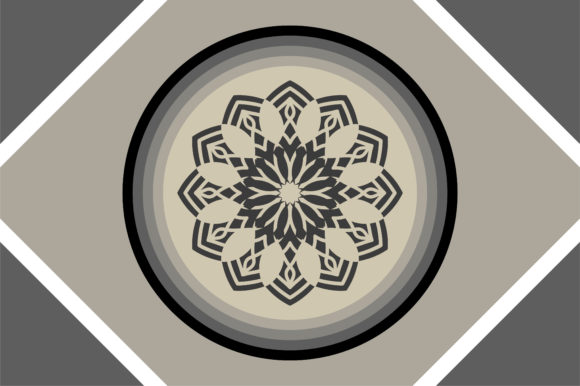
The term Mandala Ornament Decorative refers not just to a single image, but to a versatile digital asset designed for professional implementation. It is a vector-based design system that provides a foundational pattern, a motif, ready to be deployed across a vast spectrum of creative and commercial applications. For professionals and creators, this represents a high-quality, editable starting point rather than a final product. Its true value is unlocked when it is seamlessly integrated into your existing workflows, saving time on original pattern creation while offering limitless customization.
Understanding where this asset fits is crucial. In a broader creative process, the initial phase often involves sourcing or creating core visual elements. Instead of spending hours sketching complex symmetrical patterns from scratch, you can begin your project with a refined Mandala Ornament Decorative Design. This allows you to immediately focus on application and adaptation, moving past foundational design to the specific requirements of your project. It acts as a bridge between the conceptual need for ornamental beauty and the practical execution of a final product.
Preparation and Project Scoping
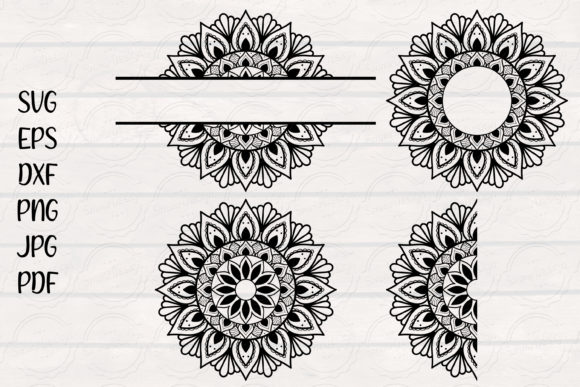
Before you even open your design software, consider how the mandala ornament will function in your project. Is it a primary motif for a fabric design, a subtle background texture for a website, or a central element for a wedding invitation suite? This scoping determines how you will prepare the file. The provided formats—EPS and SVG for vector editing, PNG and JPEG for raster use—are tools for different stages. For a project requiring scalability, like wood carving patterns or large-format wallpaper, you would start with the EPS or SVG file. For quick mock-ups or digital presentations, the high-resolution PNG might be your initial choice. This preparatory decision streamlines your workflow from day one.
Compatibility and Integration with Other Tools
The Mandala Ornament Decorative asset is designed for interoperability. Its vector formats (EPS, SVG) can be imported directly into industry-standard software like Adobe Illustrator, CorelDRAW, or even free alternatives like Inkscape. This seamless integration means the design becomes a native element within your working environment. You can layer it with other vector assets, combine it with typography for invitation design, or isolate specific elements to use as a repeated motif for carpet ornament design. The 300 DPI resolution and RGB color profile ensure it matches the specifications of most digital design projects without requiring corrective adjustments, maintaining quality control from the outset.
For physical applications, such as planning for henna art, tattoo design, or wood carving, the scalable vector files allow artisans and professionals to print or trace the design at any size without loss of detail. This compatibility between the digital asset and physical execution tools—like printers, engraving machines, or stencil materials—is a key factor in its practical utility.
Practical Implementation Across Use Cases
Let’s examine how this asset integrates into specific workflow examples. For a freelancer designing a client’s wedding stationery, the process might begin with the SVG file. They open it in Illustrator, change the color to match the client’s palette using the editable paths, and extract a portion of the pattern to form a border for the wedding invitation. The same base file is then scaled down and modified for the greeting card, and perhaps a more intricate section is used for a monogram on the wedding decoration signage. One asset feeds a coordinated series of outputs, ensuring visual consistency across the entire event.
In a different scenario, a small business owner producing custom fabrics might use the EPS file as a repeatable pattern module. They can manipulate the spacing, mirror elements, and change colors to create unique variations for different textile lines. This application demonstrates the asset’s role in efficient production; one core design can generate multiple derivative products, organizing the design library and speeding up the prototyping phase.
Customization as a Core Process Step
The feature set—easy to customize, can be changed color, can be resized—is not just a list of benefits; it outlines a direct process step within your workflow. Customization is where your creative direction takes over. For a blogger creating floral background themes for their website, they might take the PNG file, adjust its opacity in Photoshop, and blend it with photography. For a marketer designing a social media campaign around cultural themes, altering the colors to suit different brand messages or seasonal promotions becomes a quick, repeatable task. This step transforms the universal mandala ornament into a bespoke element that serves your specific outcome.
Organization for Long-Term Asset Use
For educators, publishers, or productivity-minded users who manage libraries of resources, how you store and organize these files impacts long-term efficiency. Labeling the files clearly—perhaps “Mandala_Ornament_Vector_EPS” or “Mandala_Ornament_Background_PNG”—within your digital asset management system allows for quick retrieval for future projects. Because the design is scalable and editable, it can be adapted years later for a completely new purpose, like paper ornament crafts or a new line of wreaths designs. Treating it as a perennial component of your creative toolkit, rather than a one-use item, maximizes its value.
Quality control is inherently built into the asset’s specifications. The 300 DPI resolution guarantees that even for high-end print applications like carpet ornament design or professional wedding decoration prints, the output will remain sharp. By starting with a file that meets professional standards, you eliminate a common workflow hurdle: upscaling low-resolution images and dealing with resultant pixelation.
Observations on Workflow Efficiency
Integrating a pre-designed Mandala Ornament Decorative element can significantly compress the timeline of a project. The most time-intensive part of ornate design is the initial symmetrical construction and balancing of elements. This asset delivers that completed. Your workflow then shifts to application logic: placement, color theory for your brand or event, and integration with other content. This separation of concerns—between foundational pattern-making and contextual application—makes the entire process more manageable and less daunting, especially for entrepreneurs or hobbyists who may not have extensive training in complex drawing.
Finally, consider its role in collaborative workflows. If you are working with a printer for physical invitations, you can send the edited vector file directly. If you are briefing a tattoo artist, you can provide the scalable design as a precise reference. The asset becomes a common, high-quality visual language between you and other professionals in the execution chain, reducing miscommunication and ensuring the final product matches your vision.
In essence, the Mandala Ornament Decorative Design is a process accelerator. Its utility spans from the earliest planning stages—where it helps visualize possibilities—through the active execution phase—where it is edited and applied—to the final quality assurance—where its technical specifications guarantee output integrity. By understanding its formats and features as tools within your specific workflow, you can harness its flexibility for ornament decoration, pattern creation, and motif development across the diverse fields of fabric design, wood carving, digital backgrounds, and celebratory art, turning a single purchased product into a cornerstone of your creative productivity.