Maroon Valentine's Day Card Template: A Versatile Tool for Modern Expressions of Love
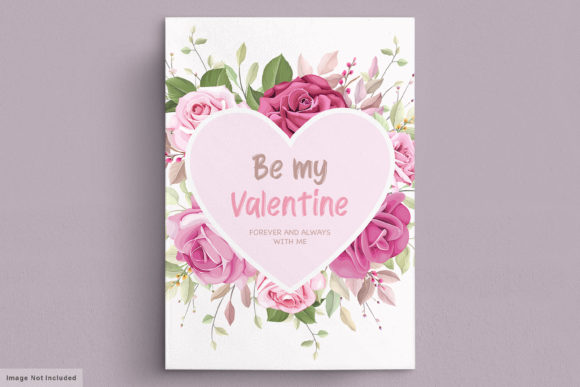
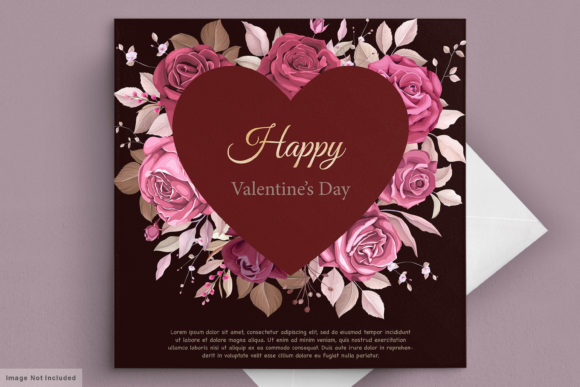
Finding the perfect words and design for Valentine’s Day can be surprisingly challenging, especially when time is scarce or creative confidence is low. This is where the Maroon Valentine's Day Card Template comes into play. It’s not just a graphic file; it’s a practical starting point designed to streamline the process of creating a beautiful, personalized greeting. The template provides a complete, professionally designed foundation featuring elegant floral and leaf motifs in a rich maroon color palette, allowing you to focus on the personal message rather than starting from a blank page.
Where This Template Finds Its Place in Real Life
Imagine you’re running a small boutique or an online stationery shop. Valentine’s Day is a peak season, but designing a unique, high-quality card for every customer or for your own product line is resource-intensive. With this template, you have a ready-made, editable design that can be quickly customized with your brand's name or a client's specific request. It transforms a days-long design process into a matter of hours, enabling you to offer a professional product without the overhead of a full design team.
Beyond commercial use, consider the individual who wants to move beyond a store-bought card. Perhaps they’re crafting a card for a partner who appreciates aesthetics, or for a friend celebrating a “Galentine’s Day.” The template empowers someone with basic computer skills to create something that looks curated and thoughtful. It bridges the gap between a generic mass-produced card and a fully custom, hand-illustrated one, which might be outside most people’s skill set.
Adapting the Template for Different Relationships and Audiences
The classic maroon and floral design is versatile. Its elegance makes it suitable not only for romantic partners but also for expressing appreciation to family members, close friends, or even colleagues in a more formal workplace setting where a heartfelt note is appropriate. A teacher might use it to create a small, beautiful thank-you card for their students or vice versa. The color and style avoid being overly childish or too casually playful, giving it a wide range of application.
For the creatively inclined but time-pressed, the template serves as inspiration. They might use the provided Adobe Illustrator AI, EPS, or JPG files not just to edit text, but to experiment—changing color accents of the flowers, adding a small personal photo overlay, or integrating other graphic elements they’ve created. It becomes a collaborative base for their own ideas.
Practical Considerations Before You Begin
Before diving in, it’s wise to assess your needs and tools. The template is designed as a single-sided 5×7 inch card with a bleed area. This standard size is ideal for most home printers or professional printing services. The bleed area is crucial; it ensures that if you print the card professionally, the color and design run to the very edge of the cut paper without unwanted white borders. If you’re printing at home, you might need to adjust your printer settings to accommodate this.
Access to software is another key consideration. The included AI and EPS files are best opened and edited in vector-based design programs like Adobe Illustrator. This allows for the most flexible and high-quality editing of all elements. The JPG provides a simpler, raster image option, but editing text or shapes within it would require different software and might compromise quality. If you don’t own Illustrator, checking for compatible software or using a service that can handle these files for you is an important first step.
Recognizing Its Strengths and Navigating Limitations
The core strength of the Maroon Valentine's Day Card Template is its combination of ready-made beauty and editable flexibility. It delivers a sophisticated visual outcome quickly. It also removes the anxiety of layout and color scheme for non-designers. The floral design is timeless and avoids overly trendy elements that might not resonate with all audiences.
A potential limitation is its specificity. It is a maroon floral card. If your desired theme is minimalist, ultra-modern, or features a specific non-floral symbol, this template might not be the right foundation. It’s also a single design. While editable, it’s one aesthetic. For someone needing a suite of cards with different looks, multiple templates would be necessary. Furthermore, truly advanced customizations—like completely altering the illustration style—would require significant design skill, as the template is a guide, not a limitless construction kit.
Everyday Scenarios and Creative Observations
Let’s look at a few concrete examples. A busy professional wants to send a card to their spouse but finds all retail cards too cliché. They download the template on a Wednesday evening, use Illustrator to change the main greeting text to a line from their favorite poem, and add their spouse’s name in a elegant script. They send the JPG to a local print shop for a high-quality print on Thursday and have a unique, meaningful card ready by Friday.
An event planner is organizing a Valentine’s Day dinner for a client corporation. They need place cards or small thank-you notes for attendees that align with the event’s décor. The maroon and floral template matches the planned table settings. They efficiently edit the file to include each guest’s name or a generic corporate message, print them in bulk, and achieve a cohesive, polished look for the event without commissioning original art.
Observations from using such tools often highlight the value of time. The emotional goal of Valentine’s Day is connection and expression. A template like this reduces the technical barrier to that expression, freeing up emotional and mental energy to craft the words that truly matter. It acknowledges that for many, the design process is a hurdle, not the joy, and it effectively removes that hurdle.
How Different Users Extract Unique Value
The value derived shifts with the user. For a small business owner, it’s a cost-effective product component that boosts revenue. For a graphic designer, it might be a reliable asset they can quickly modify for multiple clients, saving time on repetitive projects. For an individual, it’s the pride and personal touch of giving a card that no one else will have, coupled with the convenience of not starting from zero. For a community group organizer making cards for members, it’s a way to ensure uniformity and quality across many handmade items.
In each case, the template serves as a democratizing tool. It makes a level of design quality accessible to those without specialized training or extensive time, allowing the focus to remain on the sentiment and the occasion itself. It’s a practical solution for a common modern problem: wanting to create something beautiful and personal within the constraints of a busy life.