The Elegance of Lily Flower Vectors in Contemporary Invitation Design
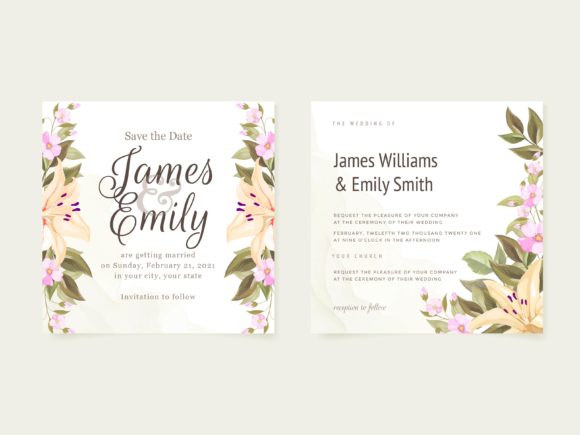
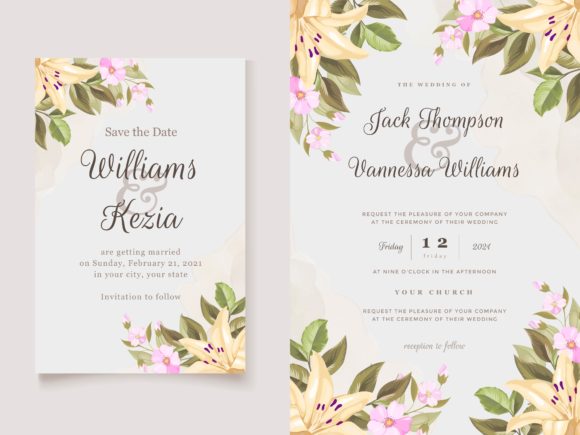
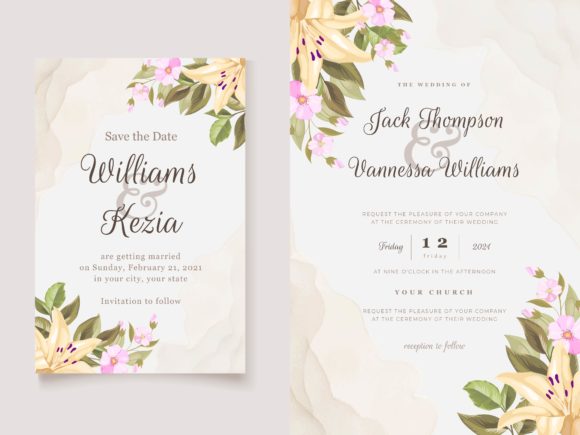
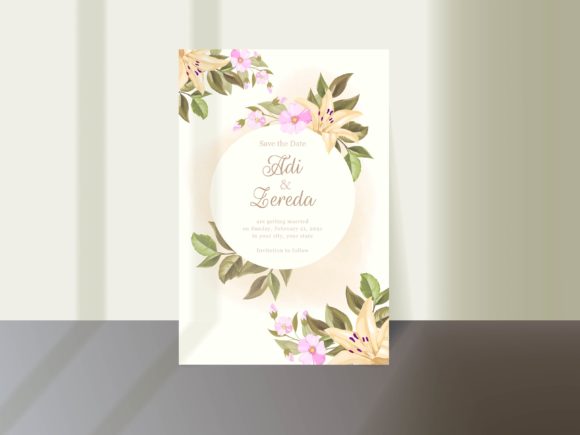
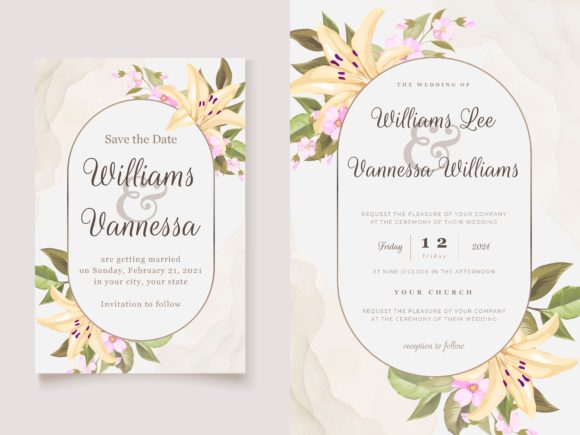
In the realm of wedding stationery, the quest for a design that balances timeless elegance with personal expression is paramount. A Wedding Invitation Lily Flower Vector represents a sophisticated cornerstone for such a project, offering a blend of botanical grace and digital versatility. When integrated into an Elegant Wedding Invitation Template Design, these floral vectors transcend mere decoration, becoming a foundational element that couples can adapt to reflect their unique story. The availability of templates featuring comprehensive Floral Vector collections, including roses and complementary leaves, marks a significant shift towards democratized design, empowering individuals to craft professional-level invitations without requiring specialized artistic skills.
Anatomy of a Modern Editable Template
The core of this approach lies in the editable template structure. Unlike a static image or a pre-printed card, an editable template is a digital file, typically in formats like AI, EPS, SVG, or a user-friendly PDF with layered elements. Within this file, the Wedding Invitation Lily Flower Vector is not a flat background but an independent, scalable object. The lilies, often symbolizing purity and commitment, are meticulously drawn with clean lines and smooth curves, allowing for infinite resizing without loss of quality. Surrounding elements, such as roses denoting love and passion, and delicate leaves providing balance, are usually separate vectors, enabling creators to adjust their placement, size, or even color palette individually.
This modular design philosophy extends to every textual component. The names of the couple, the date, venue details, and all other text are housed in editable text boxes. This means the typography—perhaps a classic script or a modern sans-serif font—can be altered, and the content updated with a few clicks. The true advantage is that the intricate floral artwork and the layout’s structural framework remain perfectly intact, ensuring the design’s inherent elegance is preserved throughout the personalization process.
Key Characteristics of High-Quality Floral Vectors
For professionals and hobbyists evaluating such resources, several technical and artistic characteristics define a superior product. First is scalability. True vector graphics are defined by mathematical points, not pixels, meaning a lily can be enlarged for a large format welcome sign or reduced for a petite ceremony card with identical crispness. Second is editability of color. Each floral element should be easily recolorable to match wedding themes; a lily might shift from pure white to a soft blush or even a deep gold. Third is compositional balance. A well-designed template arranges roses, lilies, and leaves in a harmonious layout that guides the eye naturally to the essential information, without overwhelming it.
Furthermore, the file’s organization is crucial. Layers should be logically named and grouped, allowing users to toggle visibility or lock elements they do not wish to modify. This layer-based structure is what makes the template very easy to personalized by your self, as it prevents accidental movements of core design assets and streamlines the workflow.
The Practical Advantages for Diverse Users
The application of these editable templates spans a remarkably broad audience. For busy couples planning their own wedding, the template offers a direct path to beautiful, cohesive stationery without the time investment and cost of custom design from scratch. Educators and researchers in graphic design or event planning might use these templates as teaching tools to demonstrate principles of layout, color theory, and vector manipulation. Small business owners, such as boutique stationers or wedding planners, can leverage these templates as a base for client projects, significantly accelerating their service delivery while maintaining a high standard of aesthetic output.
For creators and hobbyists in the broader crafting community, the benefits are multifaceted. The template provides a safe creative sandbox. One can experiment with color schemes—perhaps replacing green leaves with metallic gold accents—or integrate additional personal symbols alongside the provided floral vectors. The risk of "ruining" the design is minimized by the non-destructive nature of vector editing. This encourages creative exploration, which is often the precursor to developing deeper design skills.
Real-World Implementation and Considerations
Implementing such a template into a final invitation suite involves a logical workflow. The first step is assessing the software compatibility. Most templates are designed for common programs like Adobe Illustrator, InDesign, or even free alternatives like Inkscape or Affinity Designer. Some are offered in simpler, web-based editors. The user must then systematically personalize each element: updating all text fields, adjusting colors to align with the wedding palette, and possibly rearranging floral elements if the layout permits. A crucial consideration is print readiness. Users must ensure that the final modified file is exported in a high-resolution, print-friendly format, with proper bleed areas and CMYK color settings if professional printing is intended.
It is also wise to consider the scope of the stationery suite. A robust Elegant Wedding Invitation Template Design often includes matching vectors for related items—save-the-date cards, reception invites, menus, and thank-you notes. Using the same lily and rose vectors across all these items creates a powerful visual continuity that elevates the entire event’s presentation.
Navigating Customization and Seeking Support
While the process is designed for self-sufficiency, questions can arise during personalization. Perhaps a user wishes to integrate a monogram into the floral arrangement or needs to adjust the layout for a bilingual invitation. This is where the human support element becomes vital. Many providers of these high-quality digital assets encourage users to contact us on our social media account if you need some help to personalized specially for your project. Social media platforms offer a direct, often rapid, channel for seeking technical guidance, requesting minor modifications, or clarifying usage rights. This layer of support transforms the product from a static digital download into a dynamic service, ensuring the user can achieve their desired outcome confidently.
This support system underscores the E-E-A-T (Experience, Expertise, Authoritativeness, Trustworthiness) principle in the digital marketplace. It demonstrates the provider’s commitment to user success beyond the initial sale, building trust and authority within the community of wedding planners and DIY designers.
The Broader Impact on Wedding Industry Trends
The proliferation of beautiful, editable floral vectors is influencing broader trends in the wedding industry. It aligns with the growing desire for personalized yet affordable luxury. Couples no longer need to choose between off-the-shelf generic invitations and prohibitively expensive fully custom designs. This middle path, enabled by sophisticated vectors, allows for a curated feel. Furthermore, it supports sustainability efforts; digital templates eliminate the waste associated with physical sample kits and allow for precise printing quantities.
Observably, the aesthetic preferences are also evolving. Designs featuring a Wedding Invitation Lily Flower Vector often lean towards a modern classicism—clean, uncluttered, but deeply symbolic. The use of lilies, roses, and leaves in vector form avoids the sometimes overly nostalgic feel of traditional floral illustrations, giving the invitation a contemporary freshness that resonates with today’s diverse couples.
In conclusion, the integration of meticulously crafted Floral Vector assets like lilies and roses into editable template frameworks represents a significant advancement in accessible design. It empowers a wide spectrum of users—from the professional stationer to the engaged couple—to produce stationery that is not only visually stunning but also intimately reflective of their personal narrative. The combination of technical scalability, artistic elegance, and available personalized support creates a powerful toolset for anyone aiming to communicate the beauty and significance of their celebration through the very first piece of correspondence their guests will receive: the invitation.